
Blown-in insulation in Cañon City CO - an even layer all the way to the eaves
Cold bedrooms, a hot upstairs or a few flat inches in the attic? We seal the gaps and blow in an even layer.
- Fully licensed and insured.
- Free quotes on site.
- We reply within 1 business day.
Is it time to add blown-in insulation to my attic?
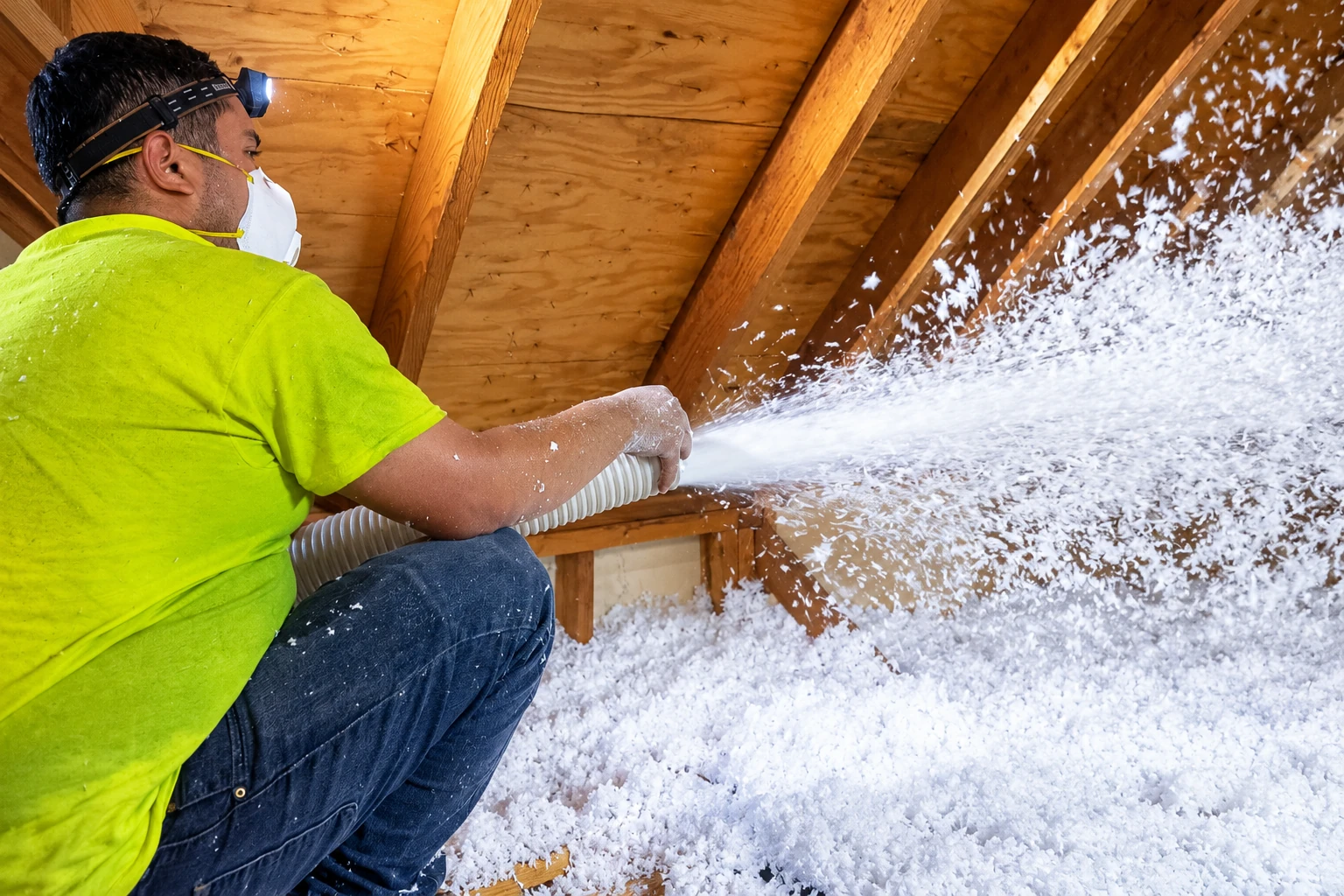
Blown-in insulation is loose cellulose or fiberglass blown through a hose onto your attic floor. For most Cañon City houses it's the plainest way to top up an attic that's gone thin over the years and get the upstairs holding heat again.
Most calls start with a cold bedroom, a hot upstairs or a power bill that keeps creeping up. When I get up in the attic there are usually a few inches of flattened old fill and open gaps around the pipes and the hatch. At Beacon Cañon City Spray Foam Insulation, the price comes down to the size of the attic floor, how much is already up there, how much sealing has to come first and whether the old layer can stay. The schedule turns on the same things, plus anything that has to be fixed before we start, like old wiring or a wet spot. Your estimate lays out what we'd do, where and why.
How we do blown-in insulation in your attic
Before any material goes up, I look over the old layer for water stains, droppings and wiring that needs an electrician first. Then our crew does the air sealing, which means closing the gaps around pipes, wires, light fixtures and the hatch, so the new insulation isn't fighting a draft. We set baffles at the eaves. Those are short chutes that hold the insulation back from the roof boards so the vents stay open and the attic can breathe. Then we blow the insulation in at an even depth across the whole attic and out into the eaves, not piled deep in the middle and thin at the edges. When we're done we leave a card by the hatch showing what went in.
If the old layer is soaked, moldy or full of droppings, blowing new fill on top just buries the problem, so we pull it out first with insulation removal. The attic is sometimes only part of the trouble, like cold floors over the crawl space or drafty walls. When that's the case I'll tell you, and we can look at the rest of the house through home insulation.
Blown-in cellulose
Cellulose is recycled paper treated to resist fire, and it packs in tight around wires and framing. That makes it a good fit for older attics with lots of odd gaps. It can sit a little higher right after it goes in than it does once it settles, so the depth on day one isn't the depth it holds.
Blown-in fiberglass
Fiberglass is lighter and doesn't hold water the way paper does. It suits attics over older ceilings and places where a small roof leak has been a worry. Either way, the estimate says which one we'd use and why.
If you spot wet insulation or droppings up there, don't wait for winter. Call (719) 204-8345 before anything new goes on top of it.
What happens when you call about blown-in insulation?
Here's how a blown-in job runs with us, from the first call to the walk-through at the end. You deal with me from the visit through the final check.
Call or send the form
Call (719) 204-8345 or use the form, and we'll set a time for me to come out. I look at the attic myself and note anything that has to be fixed before we start, like wiring, wet spots or a gas appliance.
Read your written estimate
You get a written estimate that says what we'll do, where and why, so you can see what's driving the price before you decide. If the job needs a permit, we sort it out with the right office for your address.
Our crew installs, I check
Our own crew does the work, start to finish. Once it's in, I walk the attic with you before we call it done.
Get a written estimate for your attic insulation
We reply within one business day to set a time for me to look at your attic. The estimate is free, done at your house, and there's no obligation to go ahead.
(719) 204-8345Blown-in insulation rules and attics in Cañon City
The city's Building Department issues building and other construction permits and reviews building and mechanical applications. Whether an attic top-up needs a permit at your address is that office's call, so we check which office covers your address and handle any permit the job needs before work starts. The same department licenses general and limited contractors through an application, and we're fully licensed. Its energy code handout is written for permits on new houses. It uses Climate Zone 5, the same zone behind the attic levels in the questions below.
Dry wind finds its way into eave vents here and can push loose fill back from the edges, which is one more reason the baffles go in first. We're based in Cañon City, and we see the same thin, drafty attics on jobs in Cañon City, out in Pueblo West and in other cities around them.
Blown-in insulation questions from Cañon City homeowners
How much blown-in insulation should I add to my attic in Cañon City?
ENERGY STAR recommends R49 for a Cañon City attic that already has 3 to 4 inches, and R60 for one with no insulation, because the city sits in climate zone 5. R-value is a rating for how well insulation slows heat, so a thicker layer rates higher. I measure what you've got on the visit, and the estimate says how much we'd add.
Why do you seal the attic before blowing in insulation?
Insulation slows heat but doesn't stop air, so warm air keeps leaking through open gaps under it. Air sealing those gaps on the attic floor comes first. A properly sealed and insulated attic can also help prevent ice dams on the roof, which is why we plan the two as one job.
How do I handle vermiculite insulation in my attic?
Leave it alone. The EPA's guidance on vermiculite says to assume it may contain asbestos and recommends leaving it undisturbed. Vermiculite looks like small gray-brown or gold pebbles, and the EPA lays out the steps that protect your family before you plan anything new. We won't blow insulation over it or stir it up until you've worked through those steps.
How much does blown-in insulation cost in Colorado?
Installed blown-in cellulose in Colorado usually costs about $1 to $2 per square foot. That's the going rate across the state, not our price. Your own figure comes from the written estimate once I've seen the attic. We're insured, and the work is backed by our satisfaction guarantee.
Can blown-in insulation go over recessed lights?
Only if the fixture carries an IC rating, which says it's built to touch insulation. Under the cellulose industry's installation practice, recessed lights and heaters stay uncovered unless they have that rating. Older can lights often don't, so I check each one on the visit.
What is the best way to insulate an attic, spray foam or blown-in?
For most attics, sealing the gaps and topping up with blown-in insulation is the better buy. Foam costs more and seals air while it insulates, so it usually earns its price only when the ductwork runs through the attic. If that's your house, I'll tell you on the visit.
Insulation services that often go with it
Old insulation that smells musty, has mouse trails through it or got wet from a roof leak should come out so the new layer starts clean.
If a hot room over the garage or a chilly back bedroom stays that way after the attic's done, the fix is usually somewhere else in the house.
Find out what's in your attic
Call (719) 204-8345 or send the form. Tell us how many inches are up there now and whether you have can lights, so the visit starts with the right questions.