
Home insulation in Cañon City CO - a warmer house from the attic to the floors
Cold floors, a hot upstairs or a winter power bill that keeps climbing? We find where your house loses heat and fix that first.
- Fully licensed and insured.
- Free quotes on site.
- We reply within 1 business day.
Where do I start insulating a drafty house in Cañon City?
Home insulation in Cañon City usually starts in the attic, because that's where most houses give up the most heat. Then it moves to heated basement walls and the floors over crawl spaces and garages, with the air leaks sealed first so the new insulation can do its job.
Most calls start with a cold room, a hot upstairs in summer or a winter power bill that won't quit. The price moves with how much of the house needs work, how many inches are already up there, whether old insulation has to come out first and which material fits. The schedule turns mostly on attic access and on any repairs that have to happen before we insulate. Your estimate lays out what we'd do, where and why for your house.
How we handle home insulation, from the attic down
I start by looking at the whole house, from the attic down to the floors over the cold spaces, and then I tell you where your money does the most good first instead of selling you everything at once. On the job, old insulation that's soaked or full of droppings comes out before anything new goes in, because covering it just keeps the problem. Then we seal the gaps around can lights, pipes and the attic hatch, so the new insulation isn't fighting a draft. We keep the eave vents clear so the attic can still breathe, and we fill all the way out to the edges, where most attics are thinnest.
Some houses need other work alongside it. When the old fill is too far gone to leave, insulation removal comes first, and if the floors over your crawl space have nothing under them, crawl space insulation is often the next place your money goes after the attic.
Sealing the gaps and topping up loose fill
This suits most attics, because once the leaks are closed, blown-in insulation, which is loose fill sprayed in through a hose, adds depth without the cost of foam. It's usually where I'd point you first.
Spray foam where the ducts run
Foam costs more, but it seals air while it insulates, so it pays its way when your ductwork runs through the attic or a space is too tight for deep fill. Otherwise I'd rather you spend that money on sealing and depth.
Don't wait on wet insulation, droppings or a stain on the ceiling under the attic, because those spread. Call (719) 204-8345, any day from 7 AM to 10 PM.
What happens when you call us to insulate your house?
I come out myself, our own crew does the work, and you know what goes where before anyone climbs into the attic. Here's how a job runs from the first call to the final walk-through.
Call or send the form
You reach us at (719) 204-8345 or through the form, and we set a time for me to come out. It helps to know where your attic hatch or crawl space door is.
I look over the house
I check the attic, crawl space, walls and basement and note anything that has to be fixed before we start. If part of the house isn't worth spending on, I'll tell you that too.
You get a written estimate
It says what we'll do, where and why, in the order your money does the most good, so you can do one part now and leave the rest. If foam is involved, I'll go over when you'll need to be out of the house and when you can come back.
Our crew does the work
Our own crew does the job, and I walk it with you before we call it done. The work is backed by our satisfaction guarantee.
Get a written plan for insulating your house
We reply within one business day to set a time. I come out, look the house over and leave you a free written estimate, and it's obligation-free.
(719) 204-8345Home insulation permits and houses in Cañon City
Inside Cañon City limits, building permits come from the city's building department, and out in unincorporated Fremont County it's the county building department. Whether your insulation job needs a permit is that office's call, so before we start I check which one covers your address and handle any permit the work needs. We're fully licensed and insured.
Heating is the single biggest energy use in a Colorado home, so here the money you put into insulation mostly shows up in winter. Around Cañon City we open up plenty of older houses with a few inches of tired fill in the attic and nothing under the floors over the crawl space, and we see the same thing on jobs in Pueblo West, along with cold rooms over garages. We're based in Cañon City and work in Pueblo West and other cities around it, and we start the same way everywhere, with the attic and then the cold floors.
Home insulation questions from Cañon City homeowners
How much does home insulation cost in Cañon City, CO?
The cost comes down to how much of the house we insulate, what's already there and which material you pick. Pulling out old insulation, repairs that have to come first and choosing foam over blown-in all push it up, while sealing gaps and topping up an attic that already has some depth keeps it lower. I'll give you a quote at your house once I've seen what's up there.
How much attic insulation should a Colorado home have?
Colorado State University Extension suggests R-49 or more in the attic, R-value being how well insulation slows heat, so a higher number holds heat better. The same guidance puts heated basement walls at R-11 or more and floors over unheated spaces at R-19. When I'm up there, I'll tell you how many inches you already have so you can see how far off you are.
Which type of insulation costs less, foam or blown-in?
Batts and blown-in cost less than foam, and Colorado State University Extension notes homeowners can put in either one themselves. Foam costs more but packs more R-value into each inch and can seal air too, so it earns its price when depth is limited. If you hire out blown-in, ask for the installed and settled thickness and the bag count in writing, because getting both depth and density right is what makes it work.
Should I seal air leaks before insulating my attic?
Yes, seal first. Most insulation other than foam and densely packed blown fill still lets air through, and leaks get much harder to reach once they're buried. If you have a gas furnace or water heater that vents by natural draft, ENERGY STAR advises testing that it drafts properly before and after sealing, since a tighter house can sometimes pull exhaust back inside.
How do I know if my attic needs repairs before new insulation?
If you see wet insulation, moldy or rotted framing, little or no venting or old knob and tube wiring on ceramic knobs, ENERGY STAR recommends having a professional fix it before anyone insulates. Wet insulation usually means a roof leak, and knob and tube wiring can be a fire hazard when insulation touches it. Kitchen, bath or dryer vents that blow into the attic instead of outside belong on the same list.
How do I tell if my old insulation is vermiculite?
Vermiculite looks like light, pea-size, flaky gray bits, and if you see it, leave it alone until an approved lab tests it for asbestos. Your local health department can point you to a lab. We won't disturb it until it's been tested.
Related insulation work for Cañon City homes
Old fill that smells, sags or shows signs of mice can't just be covered over, so clearing it out gives the new insulation a clean, dry start.
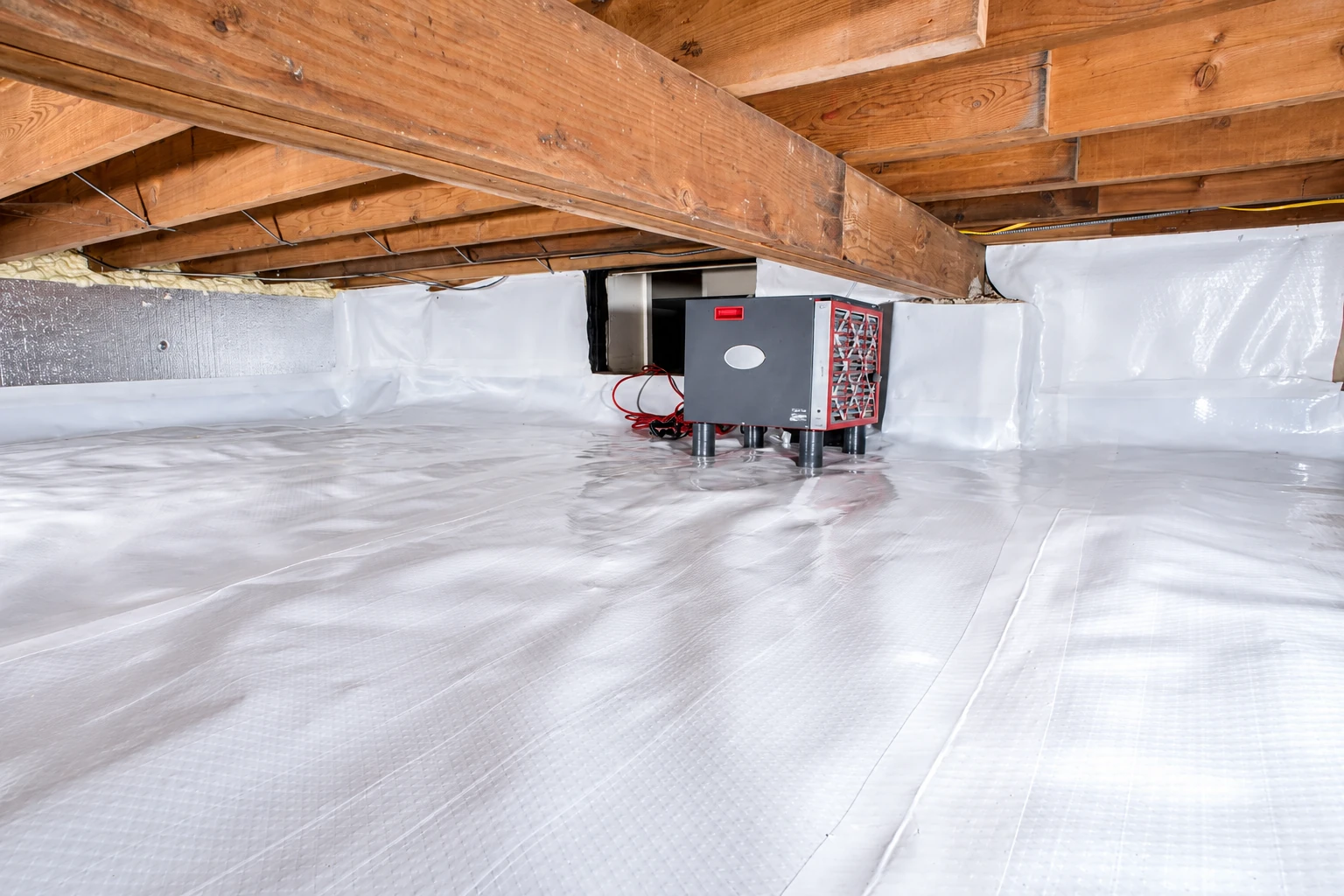
Cold floors in winter often trace back to an uninsulated crawl space underneath, and insulating it keeps the rooms above warmer when the nights get cold.
Book a look at your attic
Call (719) 204-8345 or use the form, and mention how to reach your attic and anything you've noticed about leaks, old wiring or gray, flaky insulation, so I know what to look for when I come out.