
Open-cell foam insulation in Cañon City CO - drafts sealed in the places it fits
Cold rooms and a drafty house mean air is leaking in. Open-cell foam seals those gaps, and we'll tell you where it fits.
- Fully licensed and insured.
- Free quotes on site.
- We reply within 1 business day.
Is open-cell spray foam right for my house in Cañon City?
Open-cell foam insulation is a soft spray foam that expands to fill the cracks and gaps it's sprayed into, so in Cañon City we use it to stop drafts in walls, the floor of the room over the garage and other spots where cold air gets in.
Most people call because a room is cold, the upstairs is hot in summer or the power bill keeps climbing, and they've heard foam fixes that. Sometimes it does. Sometimes closed-cell foam, a denser foam that also blocks moisture, or a mix of the two is the better fit, and sometimes you don't need foam at all. The price moves with how much area we spray and how thick, how hard it is to get to and whether old insulation has to come out first. The schedule mostly turns on what has to be fixed before we start, like old wiring or a wet spot. The written estimate lays out what we'll do, where and why, so you can weigh it on your own house.
How we put in open-cell foam insulation
I start by looking at what's there, because foam sprayed over a wet spot or around bad wiring just hides the problem. Anything that has to come first, like old wiring, a damp roof deck or a gas appliance that needs its air supply, gets sorted before we spray. Then our crew masks off what shouldn't get foam, sprays to the depth on your estimate, keeps it full out to the edges instead of thick in the middle, and trims and cleans up. Open-cell is great at stopping drafts, but in a cold place like ours it isn't the right pick everywhere, so I'll tell you when closed-cell or a mix fits better. Foam also costs more than loose fill, so if your ducts don't run through the attic, air sealing, which means closing the gaps first, and topping up blown-in loose fill usually gets you more for your money, and I'll say so.
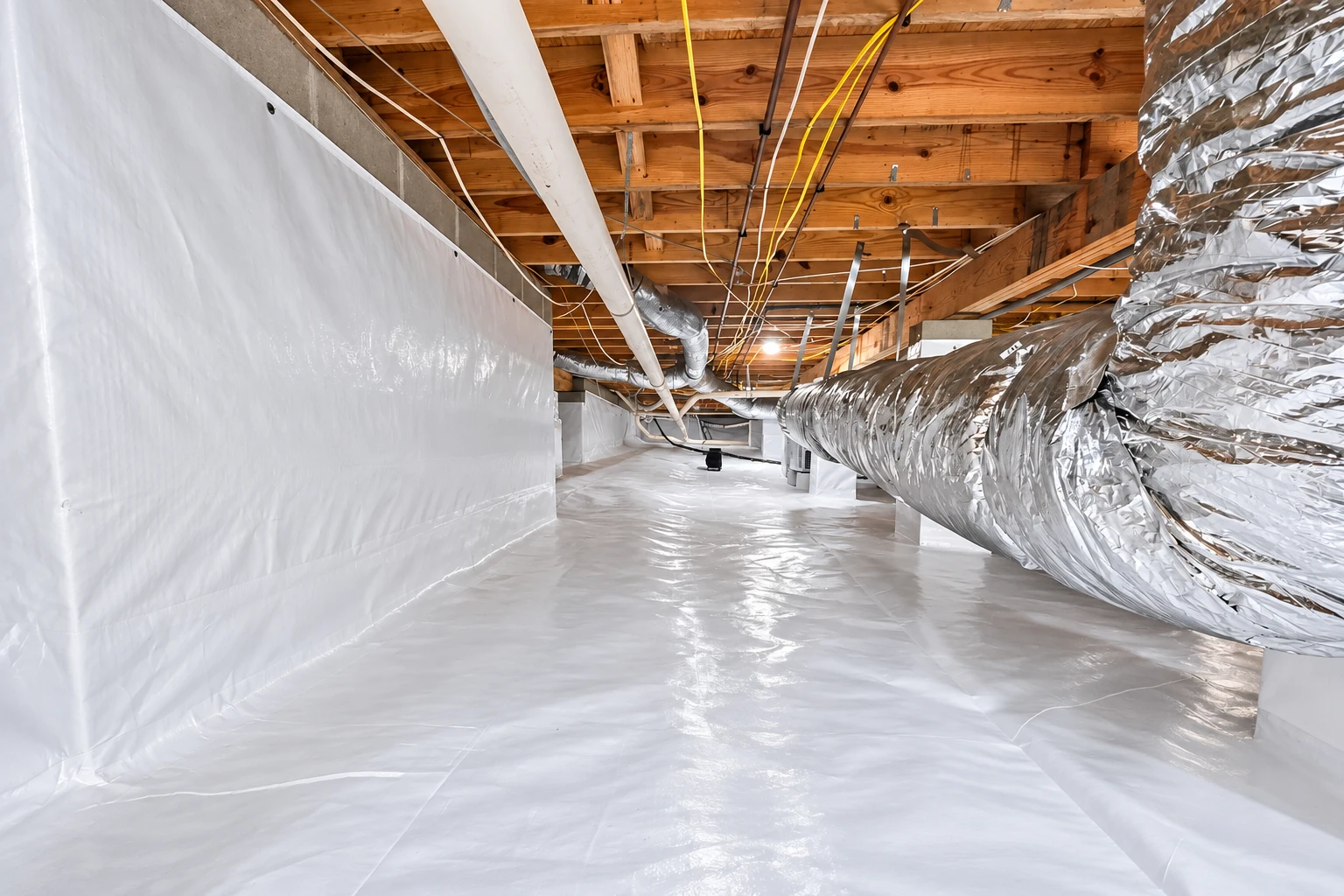
Foam is often one piece of a bigger fix. Under the house, a crawl space vapor barrier keeps damp ground from soaking into the floor framing we'd be insulating. We spray foam in shops, offices and other work buildings too, under commercial insulation.
Open-cell foam on its own
This suits walls, the floor over a garage and other inside spots where drafts are the main complaint, because it fills every crack and stays soft enough to move with the framing. It usually costs less than closed-cell for the same space.
Closed-cell, or a mix of both
This suits the underside of a roof, crawl spaces and anywhere moisture is the worry, because closed-cell is dense enough to block moisture on its own. A mix puts down a closed-cell layer first and open-cell over it, so you get the moisture control without paying for closed-cell at full depth.
Call before the drywall goes back up if you're remodeling, because open framing is the easiest and cheapest time to spray foam into a wall.
What happens when you call about open-cell foam in Cañon City?
I handle the look and the estimate myself, and our own crew does the spraying. Here's how a job goes from the first call to the walk-through at the end.
Call or send the form
Tell us which area you want insulated and whether the attic has vents. We take calls 7 AM to 10 PM, seven days a week, and set a time for me to come out.
I look before I quote
I come out myself and go through the attic, crawl space, walls or basement. I note how much insulation is already up there, how old the house is and anything that has to be fixed first.
You get a written estimate
It says what we'll do, where and why, including whether open-cell, closed-cell or a mix fits, so you know what you're paying for before you agree to anything. We also sort out any permit the job needs with the right office.
We spray, then walk it
Our own crew does the work and the cleanup. Before we call it done, I walk it with you so you can see the foam runs full depth out to the edges.
Get a straight answer on open-cell foam for your house
We reply within one business day to set a time, then I come out, look at the space and write you a free estimate on site with no obligation. Every job is backed by our satisfaction guarantee.
(719) 204-8345Open-cell foam insulation and Cañon City's rules and climate
Before any foam goes in, we check which building office covers your address. In the city that's the Cañon City Building Department, which reviews building and mechanical permit applications, issues the permits and does the inspections. Whether your particular job needs a permit isn't something I'll guess at, so we sort it out with them and handle any permit before work starts. The city also requires anyone doing paid work to hold a city license as a general or trade contractor, renewed every year, and we're fully licensed and insured. You can check any contractor yourself on the city's list of licensed contractors, which is updated once a month. We're based in Cañon City and do the same foam work in Pueblo West and other cities around it, checking with whichever office covers the address.
A climate zone directory going by the newer energy code puts Cañon City and Fremont County in zone 5B, cool and dry. That cold rating is why I don't put open-cell foam everywhere here. The houses we see range from older homes with a few thin inches in the attic to newer builds with drafty rooms over the garage, and we check both the same way.
Open-cell foam questions from Cañon City homeowners
Is open-cell spray foam a good choice for an attic in Cañon City?
Not on its own if the attic has no vents and the foam goes under the roof deck. One building science firm's guide says only closed-cell foam, or a hybrid of closed-cell and open-cell, should be used there in climate zones 5 and higher, and Cañon City falls in that range. So on an unvented attic we plan on at least some closed-cell, and I'll tell you how yours is set up once I've been up there.
What is the best way to handle moisture with open-cell foam in a cold climate?
Add an interior vapor retarder or use closed-cell instead, because open-cell stops air at normal thicknesses but still lets moisture vapor through. One building science firm's guide says open-cell can be used with an interior vapor retarder, a layer that slows moisture, and that closed-cell is preferred in cold climates. The estimate will say which way we'd go on your house and why.
How long do we have to stay out of the house after spray foam insulation?
Plan to be out for at least 24 hours, because federal product safety staff advise leaving during the install and for at least a full day after. That re-entry time, when you can come back, goes for the kids and pets too, so line up a place to stay before we book the date. The same staff suggest talking through safety steps with your contractor, and I'm glad to walk you through ours.
Does open-cell spray foam need to be covered with drywall?
It does when the foam or the code requires it, and not every foam does. Federal building guidance says a thermal or ignition barrier, a fire-resistant covering such as a coating or drywall, goes over spray foam in those cases. The foam we'd use and the code decide it, and your estimate says whether a covering is part of the job.
Can open-cell foam go on basement walls?
Yes, but it has to go on thicker there. Federal Building America guidance says open-cell is an excellent air barrier on the inside of basement walls but needs a heavier coat to handle moisture. So a basement takes more foam than sealing drafts alone would.
How much does open-cell spray foam insulation cost in Cañon City?
Your price comes from how much area we spray, how thick it goes on and the prep work, and you get it in writing at the estimate. Open-cell usually insulates at about R-3.6 per inch, R-value being how well it slows heat, so thickness sets how well a wall or roof ends up insulated. That makes thickness the fair way to compare quotes, and if a quote doesn't list it, ask.
Other insulation work that often goes with foam
If you run a shop, office or warehouse in the area, we insulate commercial buildings too, and I'll look at the space the same way before quoting it.
Bare dirt under the house keeps feeding moisture into the crawl space, so sealing it over usually comes first, before any insulation goes in down there.
Have your open-cell foam job looked at
Call (719) 204-8345 or send the estimate form, and if foam isn't worth it for your house, you'll hear that before you've spent anything.